


Life in the Cosmos is an interdisciplinary course that explores the question of what life will look like beyond planet Earth. The topic is considered both from the perspective of human life in the cosmos (i.e. manned space exploration and the far future) and extraterrestrial life that may have arisen on other planets.
Students are encouraged to think creatively and broaden their horizons through novels and film. But this is also a course with serious scientific underpinnings. Class activities and labs include observing with telescopes, designing Mars habitats (and thinking through some of the challenges that will be associated with living in them), and participating in citizen science campaigns like the NASA Exoplanet Watch Initiative.
Students also evaluate the feasibility/desirability of sending missions to various moons in our solar system, and consider the scope of the threat posed by asteroids and how to prepare for a potential strike. All the while, students think through the ethical issues associated with potential disruption of extraterrestrial environments by our exploration of them.
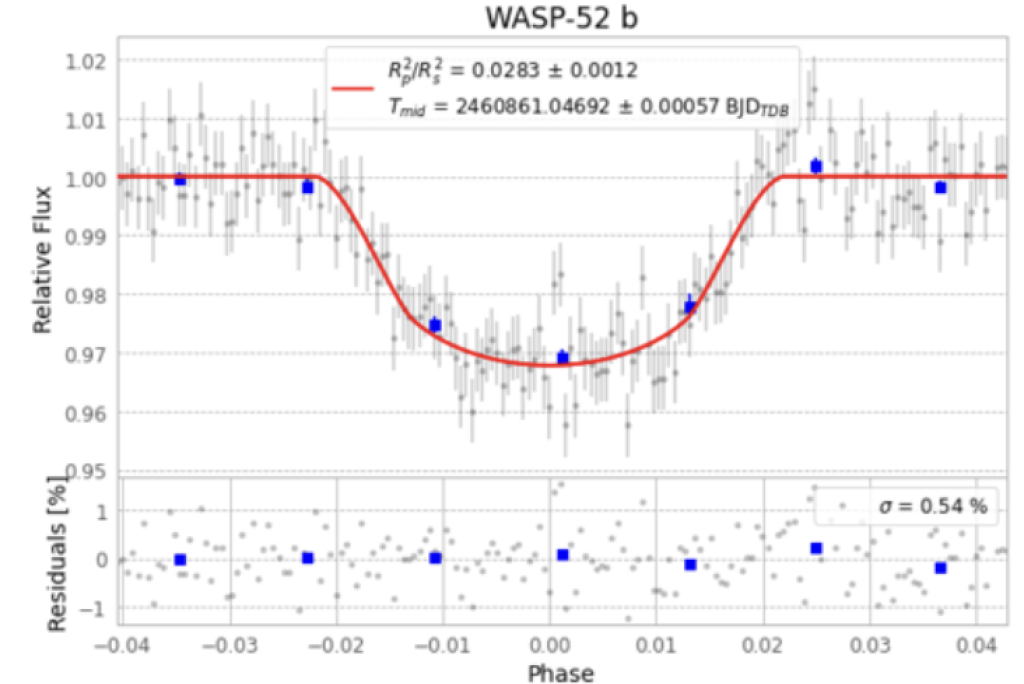
"This image is an example of analysis that Life in the Cosmos students contribute to NASA Exoplanet Watch, showing a dip in the light of a host star when an exoplanet passes in front of it along Earth's line of sight," said Kalee Tock, Science Instructor.