

The typewriter, a machine for writing, produces letters on a page in a manner distinct from that of a pencil on a page or keyboard on a screen. Writers in the twentieth century, in fact, took advantage of the typewriter’s capabilities and limitations to shape “modern” responses to their worlds, one writer calling his work “typewriter calligraphy.” We will begin with adventures in typewriting in the first half of the twentieth century—close reading literature and art, studying methods and theories—and further our adventures by adding technologies like the camera, the tape recorder and digital media to the mix. How does the typewriter change the way we look at the world? What do you get if you put a typewriter and a tape recorder together? How does digital poetry remediate the reality of the typewritten page? How is a medium a message of change? Also, we will delve into experiments like these that can engage us with the technology as writers: type your own Manifesto; photograph shapes in daily life that resemble letters, an “Alphabetography”; design (e.g., on a typewriter) a page of type for sounds (including your voice) recorded in a public environment.
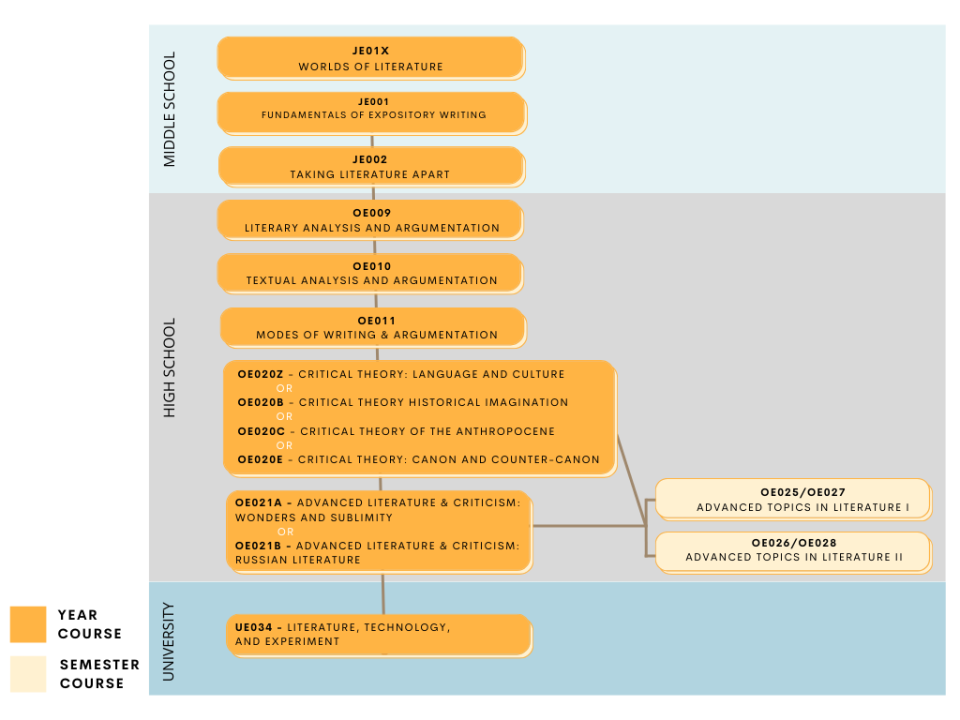
Course Number
UE034
Level
University
Semester
Year-long
Credit per Semester
5.00
Subject
Prerequisites
Consent of instructor